Women's health doesn't need more specialists. It needs an integrative view.
85 women told us how they experience their health today, the changes they notice and what they expect from a more connected, personalised model of care.

85 women told us how they experience their health today
One thing comes up again and again when we talk to women about their health: they don't feel they lack information. They feel they lack connection.
They may have a family doctor, see several specialists, try supplements, exercise, change their diet or look for answers online. But very often all those pieces stay separate.
And when the body changes, especially from certain stages of life onwards, it becomes hard to know what is related to what.
That is why, at SHOMMA, we wanted to listen before building. We ran a listening study with 85 women to understand how they currently experience their health, what they need and what they expect from a more integrative model of care.
The body changes. And often we don't know why
The results show a very clear reality: 96% of the women surveyed say they notice physical or emotional changes in their body.
The most frequent experiences were:
- Fatigue or low energy: 55%
- Mood changes or irritability: 53%
- Poorer sleep quality: 46%
- Digestive issues: 41%
- Changes in weight or body composition: 39%
- Brain fog or difficulty concentrating: 36%
- Changes in the cycle or hormones: 31%
- Loss of strength or muscle mass: 26%
Only 4% reported noticing no changes.
These figures are not intended to diagnose or explain the causes of these symptoms on their own. But they do show something important: a woman's experience is multidimensional.
Sleep, energy, mood, digestion, body composition, cognitive function, cycle and hormones can all be part of the same health conversation.
The problem is not a lack of professionals. It is a lack of connection
One finding stood out: 47% of the women surveyed say that no professional has a complete view of their health.
Another 28% have seen several professionals but feel there is no connection between them. Only 25% say they have a professional who knows their history as a whole.
Which raises a question we consider fundamental: what happens when each symptom is analysed in isolation?
One appointment for sleep. Another for digestion. Another for hormones. Another for weight. Another for stress.
Each professional can contribute a valuable piece. But a woman needs someone who can see the whole picture.
Women are already investing in their health
The research also shows a real willingness to invest in wellbeing and prevention.
43% of participants spend between 300 and 1,000 EUR a year on health, while 24% invest between 1,000 and 3,000 EUR. The study also shows that 97% have already tried some solution: from supplements and doctors to specialists or trainers.
Understand what is happening in your body
We carry out a full assessment of your hormonal, metabolic and cognitive health and design a personalised plan for you.
I want to know moreIn other words: women are already looking for answers. The challenge is not convincing them to look after their health. The challenge is offering a more coherent way to do it.
Before paying, they want to be heard
When we asked what they need before committing to a personalised plan, the answers were especially revealing:
- 59% a personalised plan
- 54% a prior assessment
- 49% feeling genuinely heard
- 37% ongoing support
- 26% being able to measure results over time
This changes the conversation. It is not simply about offering more services. It is about starting by understanding the person, knowing her starting point and building a plan that makes sense for her.
Time and price matter. But they are not the whole story
42% identify price as a barrier and 38% a lack of time. But there is another interesting figure: only 7% list speed as a priority.
According to the study, women get their information mainly through Google, doctors, friends, Instagram and podcasts. And before speed, they want to feel heard and to understand where to start.
This feels especially relevant in a world where everything seems designed to be fast. Health does not always need to be faster. It needs to be smarter, more personalised and more connected.
From prevention to longevity
This listening exercise is one of SHOMMA's starting points. Our vision comes from a simple idea: health should not begin when a problem appears.
We want to work from prevention, education and knowledge of your own body, and from there move towards a more complete assessment and personalised support.
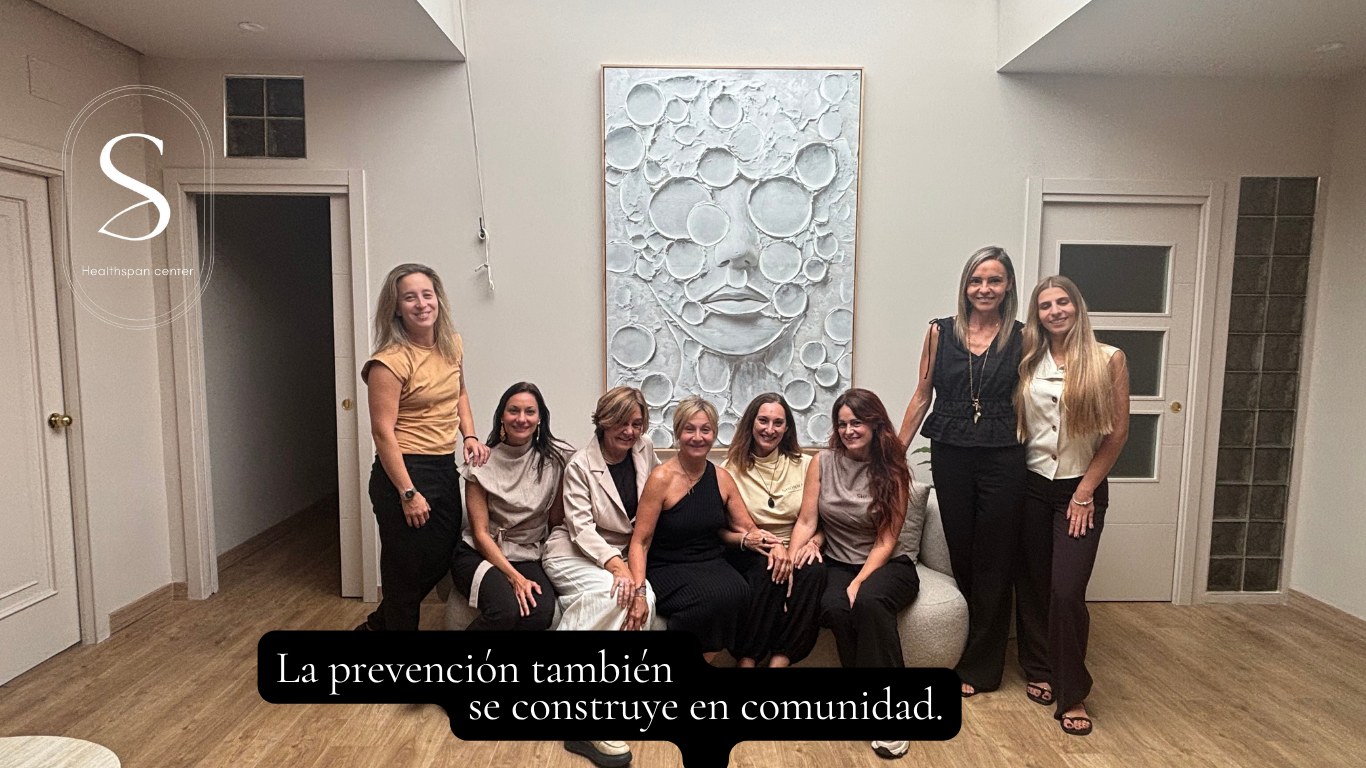
That is why we are developing two complementary entry points: SHOMMA Movement, as a space for prevention, education and community, and SHOMMA Healthspan Center, as a model for integrative assessment, diagnosis, follow-up and personalised planning.
Because knowing your body changes the way you make decisions about your health. And understanding where you are today can be the first step in designing how you want to age.
Listening before building
This study does not claim to represent all women, nor does it replace clinical evidence. It is above all a listening exercise: a way of understanding needs, frustrations and expectations before designing a health proposition.
And for SHOMMA, listening is an essential part of the process. Because our question is not only: “What service can we offer?”. The question is: “What does a woman really need to feel understood, supported and able to make better decisions about her health?”.
We keep listening.
SHOMMA. Listen to your biology. Design your longevity.
About this study
The figures in this article come from responses gathered during SHOMMA's validation process, with 85 women taking part. Response bases vary by question and the sample is not representative of the general population. This is a qualitative and quantitative listening exercise, not an epidemiological study or a source of clinical evidence.
Understand what is happening in your body
We carry out a full assessment of your hormonal, metabolic and cognitive health and design a personalised plan for you.
I want to know moreStart understanding your own healthspan
An initial Assessment with our medical team at Our Centre to establish your baseline.